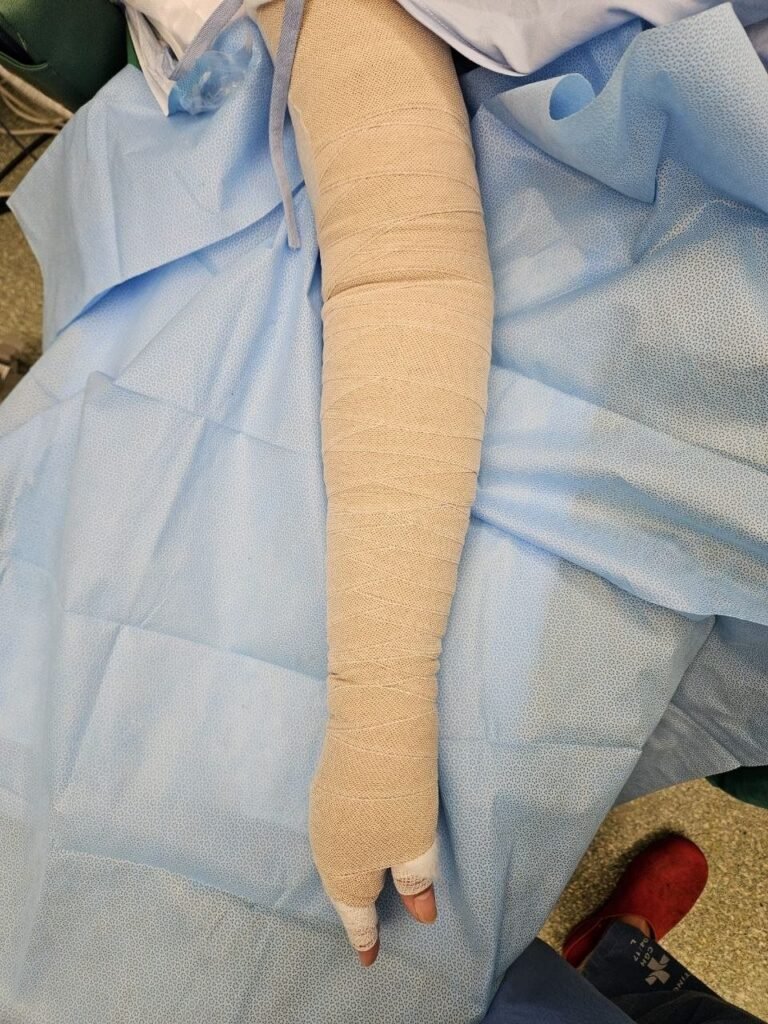
Your child’s leg has been swollen for weeks, and every doctor you have seen so far has said the same thing: it is probably nothing to worry about. But it is not going away. And something feels wrong.
Clinically reviewed by Dr Jeremy Sun Mingfa, Senior Consultant Plastic and Reconstructive Surgeon in Singapore, with subspecialty expertise in lymphedema surgery and supermicrosurgical lymphatic reconstruction. Last reviewed: August 2026.
Parents of children with lymphedema often describe the period before diagnosis as one of the most exhausting experiences of their lives, not because of the swelling itself, but because of how long it takes to get anyone to take it seriously. Pediatric lymphedema symptoms are frequently mistaken for other causes of swelling, and the condition remains underrecognized outside specialist settings.
By the end of this article, you will understand the different types of lymphedema that affect children, which symptoms to watch for at different ages, how the diagnosis is made, and what treatment for a child actually involves day to day.
Why Does Lymphedema Happen in Children, and Is It the Same as in Adults?
Lymphedema in children arises from the same basic problem as in adults: the lymphatic system cannot drain fluid from the tissues adequately, so it accumulates and causes persistent swelling. What differs in children is the reason behind that drainage failure, and the way the condition intersects with a developing body.
There are two broad categories. Primary lymphedema is caused by an abnormality in the lymphatic system itself, either present from birth or triggered later by a developmental change such as puberty. Secondary lymphedema develops when an event damages a previously normal lymphatic system. In children, that event is most commonly cancer treatment involving surgery or radiation, but it can also follow trauma, serious infection, or injury.
According to a study published in the journal Plastic and Reconstructive Surgery reviewing 142 children seen at a major vascular anomalies center, 97% of pediatric lymphedema cases were primary, with the lower limb affected in over 90% of cases. Age of onset was infancy in 49% and adolescence in 41%. Boys were more commonly affected in infancy, while girls more commonly developed swelling during adolescence.
In clinical practice, this means lymphedema in a young child is more likely to reflect a structural problem in the lymphatic system than an acquired injury. A teenager developing unilateral leg swelling without a clear cause is more likely to have primary lymphedema than a previously healthy adult with the same presentation would be.
Conditions associated with primary lymphedema in children include Milroy disease, Meige disease, Turner syndrome, Noonan syndrome, and Klippel-Trenaunay syndrome, among others. Some children have primary lymphedema without any identified underlying syndrome.
What Are the Pediatric Lymphedema Symptoms Parents Are Most Likely to Notice First?
Children cannot always describe what they are feeling with the precision adults can. This means parents often notice behavioral or physical changes before a child can articulate discomfort. Knowing what to look for, at different ages, matters.
In babies and infants
In a newborn or young infant, the most visible sign is persistent puffiness of one or both feet and lower legs that does not resolve in the first weeks of life. Normal newborn puffiness clears within days. Lymphedema does not. You may notice the skin appears tight and shiny over the swollen area, and that pressing it gently with a finger does not immediately leave a dent, or that it does leave a dent but then refills slowly.
Other signs in infants include toenails that curl upward, deep skin creases around the toes, and in boys, swelling of the scrotum. If any of these findings appear alongside leg swelling, it increases the likelihood of a congenital lymphatic condition. According to Seattle Children’s Hospital, the swelling may be worse at the end of the day or after the child has been more active.
In school-age children
In older children, lymphedema often announces itself as clothing or shoes that no longer fit properly, particularly on one side. A child may start to limp, avoid running, or complain of a heavy or aching feeling in a limb without being able to explain why. The skin over a swollen area may gradually feel thicker or less supple than the skin on the other side.
School-age children may not volunteer these complaints because they have adapted to the sensation over time, or because they are self-conscious about looking different from their classmates. Visible swelling on the playground can attract unwanted attention, and children sometimes suppress their discomfort to avoid standing out.
In teenagers
Adolescence is a common trigger point for primary lymphedema in girls in particular. If your teenager develops swelling in one foot or ankle that is not explained by an injury, and that does not resolve with rest and elevation over several weeks, it warrants investigation rather than waiting. The swelling typically starts at the foot and gradually moves upward toward the knee over months.
Teenagers with lymphedema face the additional challenge of managing a visible condition during a period when fitting in socially feels especially important. Body image concerns, difficulty finding clothes that fit, and reluctance to participate in sports or swimming are common.
What Are the Three Main Types of Pediatric Lymphedema, and How Do They Differ?
Understanding which type your child has matters for management and for understanding what to expect. The table below sets out the key differences between congenital onset, adolescent onset, and secondary lymphedema in children.
| Congenital (at birth) | Adolescent onset | Secondary (acquired) | |
|---|---|---|---|
| Cause | Lymphatic system did not develop normally | Lymphatic system was borderline at birth; hormonal triggers push it past its limit | Damage to a previously normal lymphatic system |
| First signs | Puffy feet or legs at birth or shortly after | Swelling in one foot or ankle at or around puberty | Swelling appearing after surgery, cancer treatment, infection, or injury |
| Sex affected | Boys more commonly affected in infancy | Girls more commonly affected (4:1 ratio) | Depends on underlying cause |
| Genetic link | Often yes – gene changes affecting lymphatic development | Often yes – most common type of primary lymphedema overall | No – triggered by an external event or illness |
| Progression | Chronic and lifelong; needs consistent management | Chronic and lifelong; needs consistent management | Chronic; progression depends on cause and treatment |
According to a clinical review published in PMC on pediatric lymphedema, approximately one quarter of children referred for possible lymphedema are ultimately found to have a different cause of swelling, such as vascular anomalies, cardiac disease, or low protein levels in the blood. This is one of the reasons that specialist assessment, rather than a wait-and-see approach, is the appropriate path when lymphedema is suspected.
How Is Lymphedema Diagnosed in a Child?
Most children with lymphedema can be diagnosed through a thorough clinical history and physical examination by a specialist experienced with the condition. Boston Children’s Hospital notes that clinical evaluation is the primary diagnostic method, with imaging used to confirm or clarify the picture when needed.
The physical examination focuses on the pattern and character of the swelling, the skin quality over the affected area, and a test called the Stemmer sign: trying to gently pinch a fold of skin at the base of a toe or finger on the affected side. If the skin cannot be pinched or feels noticeably thicker than the same spot on the unaffected side, this strongly supports a diagnosis of lymphedema rather than other causes of swelling.
Lymphoscintigraphy is the most established imaging investigation for confirming lymphedema. In this test, a tiny amount of radioactive tracer is injected under the skin and its movement through the lymphatic vessels is tracked over several hours. In children, it confirms or excludes lymphatic drainage abnormalities and can identify which part of the system is not working properly. Newer techniques such as ICG fluorescence lymphography, which uses a harmless dye visible under infrared light, are also increasingly used and do not involve radiation.
If a genetic cause is suspected, referral for genetic testing is appropriate. A blood or cheek swab sample allows laboratory analysis of genes known to be associated with primary lymphedema. A positive result can identify the specific form, guide management, and allow other family members to be tested. Genetic testing does not find a causative variant in all cases, but when it does, it adds valuable information.
| DR. SUN’S CLINICAL PERSPECTIVE“children are frequently seen after years of being told their swelling is just how they are built, or that they are overweight, or that it will settle down. The delay matters because the earlier we start proper management, the better we can protect the tissues from the fibrotic changes that make lymphedema harder to treat over time.”This means for patients that if your instinct as a parent tells you that something is wrong with your child’s limb, pursuing a specialist opinion is the right call, even if you have already been reassured by a general doctor. A diagnosis changes what is possible. |
What Does Childhood Lymphedema Treatment Actually Look Like Day to Day?
Lymphedema has no cure. What treatment does is control the swelling, protect the skin, reduce the risk of complications, and allow a child to live as fully and actively as possible. The good news is that children generally adapt well to a management routine when it is introduced early and explained clearly.
The foundation of childhood lymphedema treatment is complete decongestive therapy (CDT), the same core approach used in adults but adapted for a child’s size, skin, developmental stage, and daily routine. Cleveland Clinic Children’s describes CDT as combining manual lymphatic drainage with compression therapy, skin and nail care, and a tailored home exercise program.
What is pediatric MLD therapy, and how is it different for children?
Manual lymphatic drainage (MLD) is a gentle, specialized form of massage that encourages lymphatic fluid to move from blocked areas into functioning lymphatic channels, where it can drain normally. The technique uses very light pressure, slow rhythmic movements, and specific sequences tailored to the anatomy of the lymphatic system.
In children, MLD is adapted to be shorter and gentler than in adults, and the therapist needs specific pediatric training. According to a prospective study published in Acta Dermato-Venereologica, MLD is well accepted by children and reduces skin thickness, which may help prevent the long-term fibrotic changes that complicate advanced lymphedema. Parents are typically taught a simplified home version of MLD to perform between clinic sessions, making daily care sustainable as part of the family’s routine.
Compression garments for a growing child
Compression garments, stockings or sleeves that apply graduated pressure to the affected limb, are a central part of long-term management. In children, these must be custom-measured and replaced regularly as the child grows, which is a practical and financial consideration families need to plan for.
A pediatric certified lymphedema therapist (CLT) will measure your child and prescribe the correct compression level and garment type. Getting this right matters: a garment that is too loose provides little benefit, and one that is too tight can cause discomfort or impair circulation. Cleveland Clinic notes that pediatric CLTs also design garment schedules and exercise programs suited to the child’s age and stage of development.
Skin care and infection prevention
Cellulitis is the most common serious complication of lymphedema in children. According to the pediatric primary lymphedema study from Children’s Hospital Boston, 18.8% of children experienced cellulitis, with 13% requiring hospitalization. Any break in the skin of a lymphedematous limb, even a small scratch or insect bite, can allow bacteria to enter and cause a rapidly spreading infection that needs prompt antibiotic treatment.
Daily skin moisturizing, keeping nails trimmed and clean, and protecting the limb from cuts and abrasions are not optional extras in lymphedema management. They are essential. Children should learn from an early age that caring for the skin of the affected limb is a daily habit, like brushing teeth.
How Does Lymphedema Affect a Child’s Life at School and with Friends?
Managing lymphedema is not just a physical undertaking. It shapes how a child experiences themselves in social settings, at school, and in activities with friends. According to research published in the Lymphatic Research and Biology journal on parental experience, parents describe the condition as invading many aspects of daily family life, with the challenges becoming particularly acute during adolescence.
Visible swelling can draw unwanted attention. Wearing compression garments can feel embarrassing in a setting where children are conscious of looking different. Avoiding activities like swimming, which require showing the affected limb, is common. These experiences can contribute to feelings of social isolation, lower self-confidence, and, in some children, anxiety or low mood.
Proactively involving a child’s school in their care plan makes a meaningful difference. Teachers and school nurses who understand the condition can help with compression garment schedules, recognize early signs of cellulitis, and support the child in participating in physical education with appropriate modifications. Some children benefit from brief psychological support alongside their physical treatment, particularly during adolescence.
Connecting with other families is also valuable. Specialist lymphedema centers and patient organizations often run educational events or camps for children with lymphedema, where they can meet peers who understand their daily experience, which is something children rarely find in general peer groups.
Pediatric Lymphedema Symptoms: When to Act Rather Than Wait
If you have concerns about pediatric lymphedema symptoms in your child, speaking with a lymphedema specialist early can change your outcome. Dr Jeremy Sun consults at Lymphedema Asia in Singapore, offering specialist assessment and management for children and young adults with primary and secondary lymphedema, including families traveling from overseas for specialist care.