
Lymphedema treatment
in Singapore.
Clear, specialist-reviewed guidance on lymphoedema — from first symptoms to treatment decisions.

the next step.
What brings you here?
Choose the situation closest to yours. Each path leads to a shorter guide.
Persistent arm or leg swelling
Understand common causes and when swelling may be lymphatic.
Read the lymphedema overview →Swelling after cancer treatment
Learn about breast-cancer related lymphoedema and early warning signs.
Go to cancer-related swelling →Considering lymphatic surgery
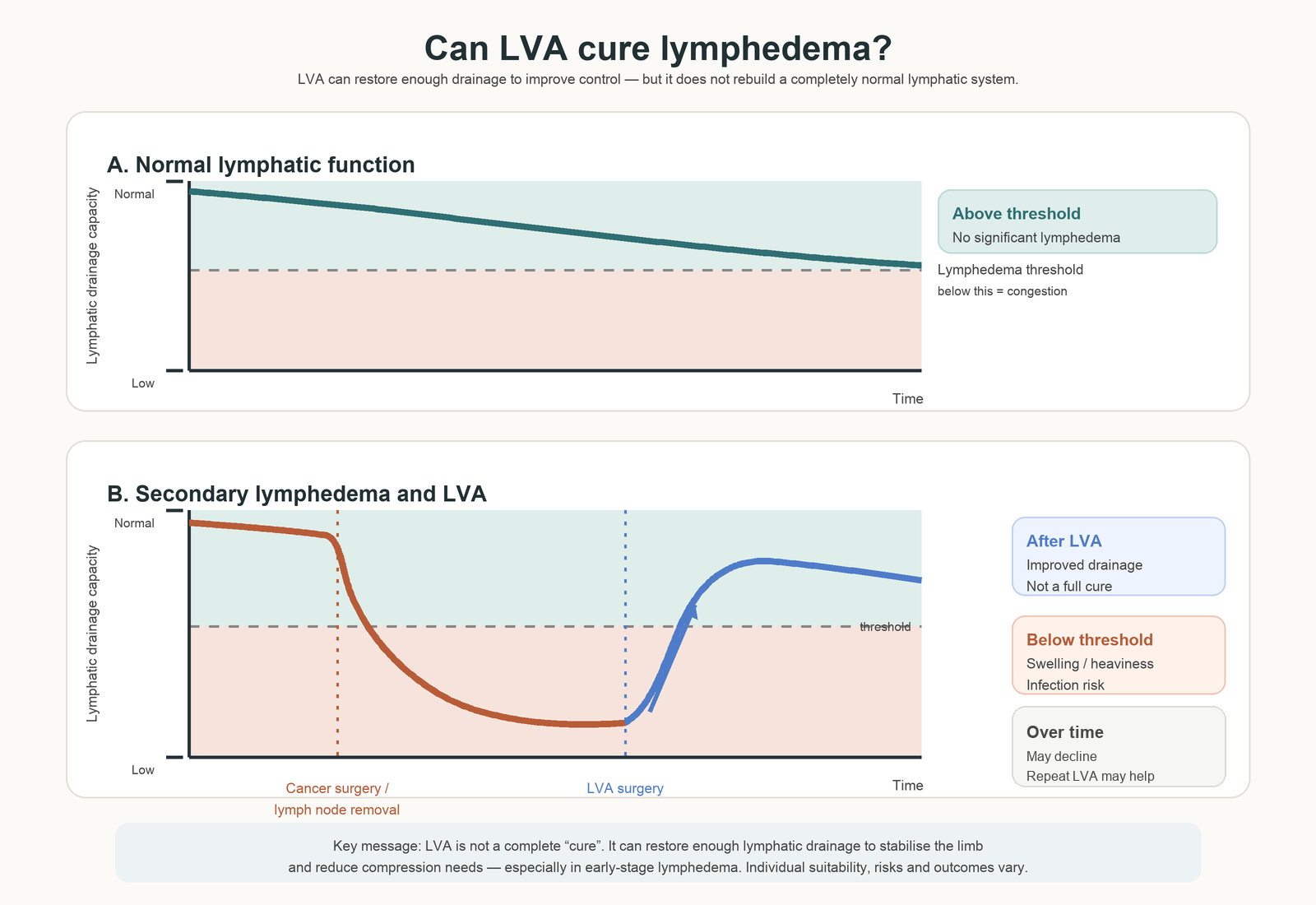
See how imaging and disease stage affect whether LVA may be suitable.
Explore LVA surgery →A simple treatment pathway
Lymphoedema care is usually a sequence of decisions, not one isolated treatment.
Confirm the cause
Separate lymphoedema from venous swelling, lipedema and general oedema.
Control swelling
Compression, skin care and therapy remain the foundation.
Map lymphatics
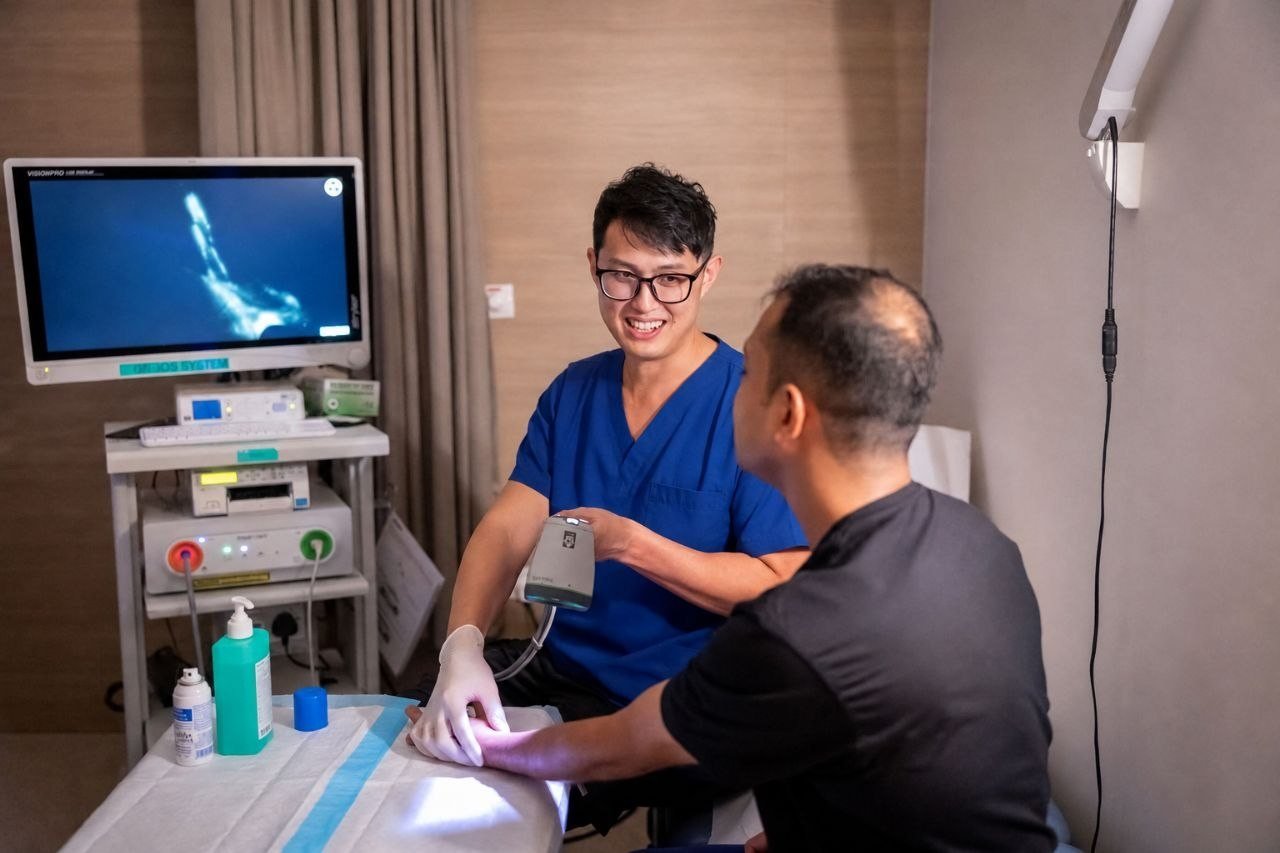
ICG lymphography and ultrasound help identify usable channels.
Consider surgery
LVA, VLNT or liposuction may help selected patients.
Read more only where you need detail.
These guides sit behind the landing page so the homepage stays simple.
What matters most
Good lymphoedema care is stage-specific. Early, pitting swelling is different from long-standing fibrofatty enlargement.
- LVA is best considered before all lymphatic channels are lost.
- Compression and therapy are still important.
- Surgery should be planned with imaging, not guesswork.

Reviewed by Dr Jeremy Sun
Plastic and reconstructive surgeon in Singapore with subspecialty training in lymphatic surgery, including LVA and lymphatic imaging.
Read Dr Sun’s profileNeed help deciding the next step?
Send a brief message if you are unsure whether swelling needs lymphatic assessment, imaging or treatment planning. Non-urgent private enquiries are routed to Dr Jeremy Sun / Astrid Plastic Surgery.
For urgent symptoms, seek urgent medical care. This form does not replace a consultation.
Your questions.
A simpler starting point.
Lymphedema or lymphoedema?
Both spellings refer to the same condition. Singapore patients may encounter either spelling.
Is LVA for everyone?
No. LVA is most useful when functioning lymphatic channels can still be found. Imaging helps decide suitability.
When should I seek assessment?
Persistent swelling, heaviness, recurrent cellulitis or swelling after cancer treatment are reasons to consider assessment.
This website provides general education only and does not replace a medical consultation.