
Clinically reviewed by Dr Jeremy Sun Mingfa, Plastic, Reconstructive & Lymphedema Surgeon in Singapore. Last reviewed: September 2026.
Short answer: LVA and VLNT are not competing versions of the same operation. They work differently, recover differently and are suited to different patterns of lymphedema. LVA / lymphovenous bypass creates immediate drainage bypasses between lymphatic vessels and nearby veins. VLNT / vascularised lymph node transfer is a flap-based operation that relies on transferred lymphatic tissue and slower biological remodelling. Liposuction has a different role again: it reduces fibrofatty bulk in selected solid, long-standing lymphedema.
Considering specialist lymphatic assessment with Dr Jeremy Sun? LymphedAsia is an educational resource. For Dr Sun’s clinician profile and patient-facing Singapore consultation information, see Dr Jeremy Sun’s lymphedema surgery page and lymphovenous bypass / LVA surgery information. Online information does not replace individual medical consultation.
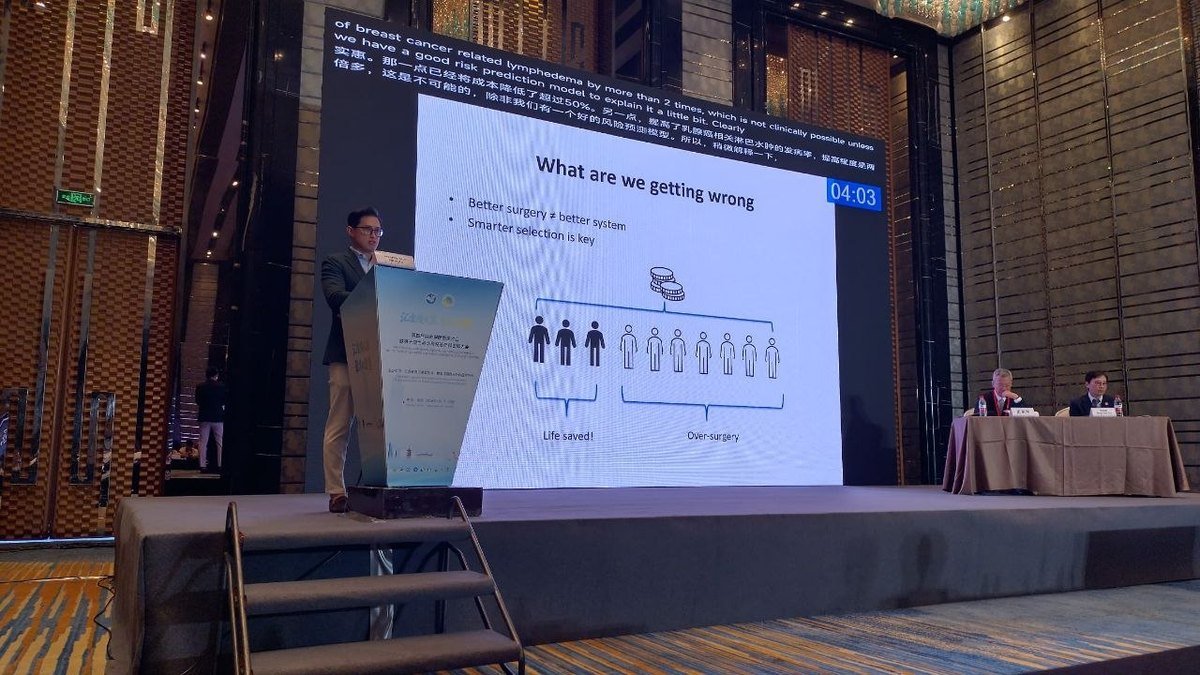
Modern lymphatic surgery is not only about technical ability. It also requires choosing the right operation for the right patient, weighing clinical benefit, recovery burden and cost-effectiveness.
LVA vs VLNT: why the comparison can be misleading
Many patients search for “LVA vs VLNT” because they receive conflicting advice. One person may be told LVA is not useful. Another may be told lymph node transfer is the only reconstructive option. A third may be advised to consider liposuction.
The reason is that lymphedema surgery is not one single treatment. The right option depends on stage, imaging, remaining lymphatic function, tissue composition, cellulitis history, previous cancer or lymph-node surgery, and the patient’s goals.
The better question is not “which operation is best?” It is: which mechanism matches this patient’s lymphedema?
What LVA does
LVA, also called lymphovenous bypass, lymphaticovenular anastomosis or lymphaticovenous anastomosis, connects selected lymphatic vessels to nearby small veins under high magnification. The aim is to offload lymph fluid into the venous system through tiny bypasses.
- Mechanism: creates new lymphatic-to-vein drainage pathways.
- Usual recovery burden: often a one-night hospital stay in suitable cases, with patients usually walking on the day of the operation.
- Timeline: because a drainage bypass is created at surgery, LVA can have immediate decongestive effects in selected patients. With good postoperative therapy and compression planning, improvement may continue over months and sometimes up to a year.
- Best suited for: patients in whom usable lymphatic channels can still be identified and connected to suitable veins.
LVA does not cure lymphedema or restore a completely normal lymphatic system. Dr Sun often explains the aim using a traffic analogy: if a 100-lane highway has become congested, LVA may reopen enough drainage lanes to restore function above a useful threshold. It does not necessarily return the system to all 100 original lanes.
Why some patients are told LVA is not possible
A patient may be told that LVA is not possible because no suitable lymphatic channels were found. However, that conclusion depends on how the lymphatics were assessed.
Modern LVA planning often uses a combination of ICG lymphography and high-frequency ultrasound. ICG is useful for showing superficial lymphatic flow patterns and dermal backflow. High-frequency ultrasound can add important information about lymphatic vessels that may be deeper, less obvious on surface imaging, or hidden in more established disease.
Ultrasound can help identify lymphatic channels, assess their depth and quality, locate nearby veins and guide incision planning. This is one reason opinions on LVA can differ between centres. Sometimes the question is not “are there no lymphatics?” but “have they been looked for with the right tools and experience?”
This does not mean LVA is suitable for every patient. It means that a proper LVA opinion should be based on modern lymphatic imaging and experience interpreting those findings.
What VLNT does
VLNT, or vascularised lymph node transfer, transfers lymph-node-containing tissue with its blood supply from one part of the body to another. It is a flap-based reconstructive operation and is therefore more invasive than LVA.
- Mechanism: traditionally described as lymph node transfer that helps absorb lymph fluid and promote lymphangiogenesis, or new lymphatic connections.
- Evolving understanding: many lymphatic surgeons now think an important component of VLNT may be the lymphatic vessels and lymphatic tissue transferred together with the flap, not only the lymph nodes themselves.
- Timeline: biological remodelling and lymphangiogenesis take time. The effect is not expected to occur immediately after the operation.
- Recovery burden: VLNT usually involves longer operating time, donor-site considerations, a longer hospital stay and a longer recovery than LVA.
- Compression issue: early postoperative compression may need to be limited or avoided around the transferred flap. For some patients, swelling can temporarily worsen before it improves.
VLNT can be valuable for selected patients, especially when the lymphatic situation is not suitable for LVA alone. But it should not be presented as interchangeable with LVA. It works on a different timeline and carries different trade-offs.
Where liposuction fits
Liposuction for lymphedema is a reductive procedure, not a physiologic bypass or lymphatic reconstruction. It is mainly considered when long-standing lymphedema has become solid, fibrofatty or fibrosis-dominant rather than mainly fluid-dominant.
In this setting, swelling may no longer be removable by drainage alone because the limb volume includes excess fat and tissue change. Liposuction can reduce this bulk in selected patients, but it does not repair the underlying lymphatic drainage problem.
Because liposuction can injure remaining lymphatic channels if performed indiscriminately, lymphatic-sparing principles are important. The Brorson approach to lymphedema liposuction emphasises careful technique and strict postoperative compression. The aim is not cosmetic contouring, but volume reduction while respecting remaining lymphatic function as much as possible.
Quick comparison: LVA, VLNT and liposuction
- LVA: creates lymphatic-to-vein bypasses. Often smaller incisions, one-night stay in many cases, walking on the day of surgery, and earlier decongestive effect when suitable lymphatics are present.
- VLNT: transfers vascularised lymphatic tissue. More invasive flap surgery, longer recovery, delayed biological effect and possible early swelling before improvement.
- Liposuction: reduces fibrofatty bulk. Useful for selected solid, late-stage disease, but must be performed with lymphatic-sparing principles and usually requires ongoing compression.
Why opinions about lymphedema surgery differ
Misconceptions about lymphedema surgery usually do not come from bad intentions. They often come from different training backgrounds, different eras of treatment, or seeing only one part of the disease spectrum.
- A clinician who saw poor outcomes many years ago may not have seen current lymphatic imaging, high-frequency ultrasound planning and modern supermicrosurgery.
- A surgeon who mainly sees advanced fibrotic disease may underestimate the value of LVA in fluid-dominant disease.
- A surgeon who mainly performs one operation may naturally favour that operation.
- A patient assessed without high-frequency ultrasound may be told LVA is not feasible even when deeper usable lymphatics might be found by a lymphatic ultrasound-trained surgeon.
This is why a modern lymphedema opinion should assess the full range of options: conservative therapy, LVA, VLNT, lymphatic vessel flaps, liposuction, reductive surgery, staged surgery or continued non-surgical care.
Questions to ask before deciding between LVA and VLNT
- Is my swelling mainly fluid-dominant, fibrofatty or mixed?
- What does my ICG lymphography show?
- Has high-frequency ultrasound been used to look for lymphatic channels and suitable veins?
- Are there usable lymphatics for LVA?
- If VLNT is recommended, what is the expected mechanism and recovery timeline?
- Will compression be needed, restricted or changed after surgery?
- Is liposuction being considered because the limb is fat-dominant rather than fluid-dominant?
- What realistic outcome would count as success: symptom relief, volume reduction, fewer infections, less heaviness, easier compression or improved function?
Recurrent cellulitis despite conservative therapy
For patients with established lymphedema who have already been on appropriate conservative therapy, even one or two episodes of cellulitis are a strong reason to seek specialist lymphatic assessment. LVA does not replace compression, skin care or prompt antibiotics when infection occurs, but in suitable patients lymphatic offloading may reduce congestion and may reduce the tendency toward recurrent cellulitis. Read more about lymphedema and cellulitis risk.
Related LymphedAsia guides
- LVA surgery in Singapore
- Ultrasound mapping for LVA surgery
- Lymph node transfer and lymph vessel flaps
- Lymphedema surgery cost in Singapore
- Lymphedema treatment in Singapore
- Debulking surgery for lymphedema
This page is for education only and does not replace personalised medical advice. Suitability for LVA, VLNT, liposuction or conservative care depends on individual examination, imaging, medical history and treatment goals.