
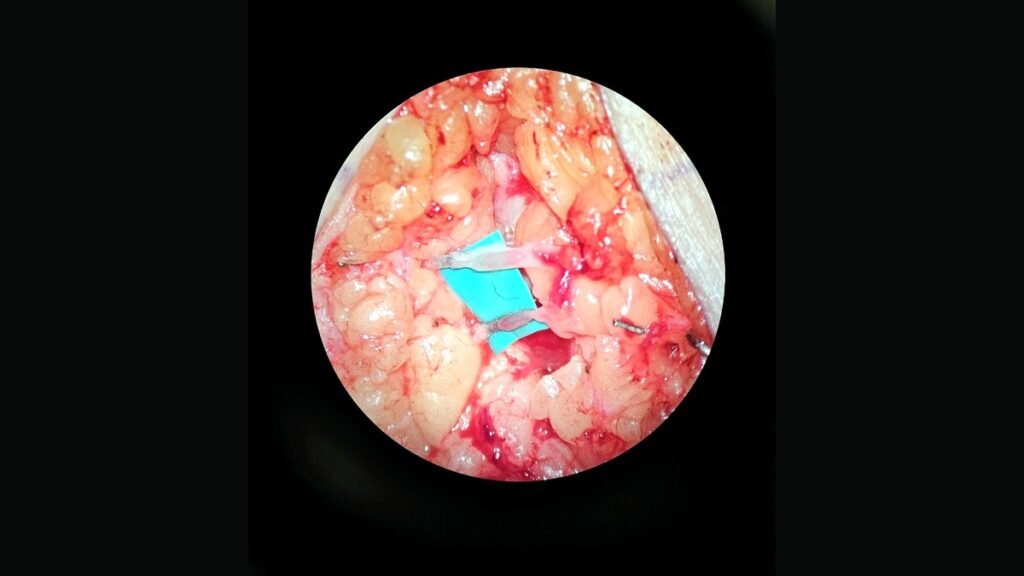
Lymphovenous anastomosis (LVA), also called lymphovenous bypass, is often described simply as connecting a lymphatic vessel to a nearby vein. That description is correct, but incomplete. In practice, the quality of the anastomosis matters. A bypass that leaks, refluxes or clots may not function well even if a connection has technically been made.
This article explains why meticulous LVA technique, ultrasound mapping, vessel selection and pressure-flow thinking are important when considering LVA surgery for lymphedema.
Short answer
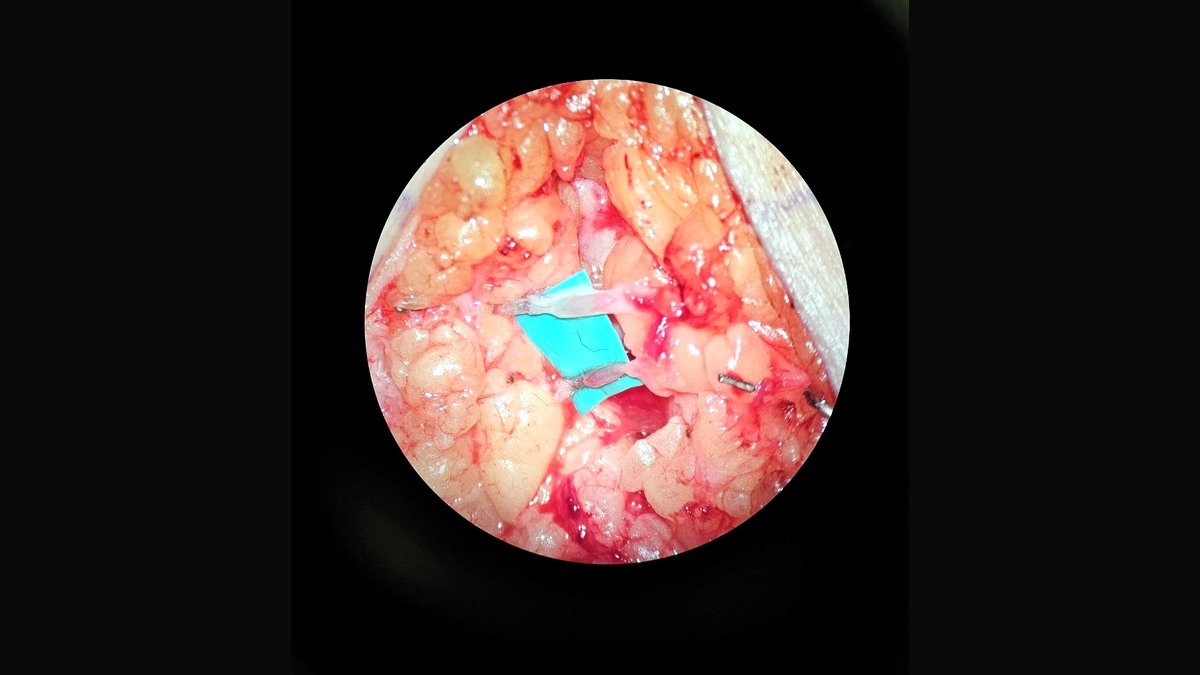
A good LVA is not just a small surgical connection. It should be a carefully planned lymph-to-vein bypass that minimises leakage, preserves a favourable pressure gradient and reduces the risk of venous reflux into the lymphatic channel. This is one reason LVA is a technically demanding supermicrosurgical procedure.
What LVA is trying to achieve
In lymphedema, lymphatic drainage is impaired. LVA aims to redirect lymph fluid from a functioning lymphatic channel into a small nearby vein. For this to work, the bypass should allow lymph to flow in the intended direction, while limiting backflow from the venous side.
This is why LVA planning is not only about finding a lymphatic and a vein. It also involves assessing lymphatic quality, recipient vein suitability, vessel size match, flow direction and postoperative therapy.
Why leakage matters
Some surgeons advocate very low-suture lymphovenous anastomoses, such as using only a few stitches. While each case must be judged by vessel size and tissue quality, inadequate coaptation may predispose the anastomosis to leakage.
Leakage is not just a cosmetic or local technical issue. If lymph leaks around the anastomosis, lymphatic pressure may fall. A lower lymphatic pressure can weaken the favourable pressure gradient that helps lymph enter the venous system.
Why venous reflux is undesirable
When the pressure relationship becomes unfavourable, venous blood may reflux backwards into the lymphatic channel. Venous reflux into the lymphatic is not ideal because it may reduce bypass effectiveness, promote clotting at or near the anastomosis, and affect longer-term bypass patency.
For patients, this means that LVA is not simply about the number of bypasses performed. The quality, flow characteristics and durability of each bypass matter.
Ultrasound mapping is critical
High-resolution ultrasound is increasingly regarded by lymphatic surgery experts as one of the most important tools in LVA planning. Ultrasound can help identify lymphatic channels and nearby veins, assess depth and calibre, and guide incision planning before surgery.
ICG lymphography remains useful for assessing lymphatic function and dermal backflow patterns, but ultrasound adds anatomical detail that can be especially important in patients with previous surgery, more advanced disease or difficult vessel selection.
Why previous surgery does not always mean no options remain
An anonymised lower-limb secondary lymphedema case illustrates why reassessment can still be worthwhile. The patient had previously undergone lymphedema treatment elsewhere, including LVA, vascularised lymph node transfer, liposuction and ongoing therapy, but the limb continued to worsen and recurrent infections remained a problem.
After referral by her therapist, further assessment including ultrasound mapping identified suitable lymphatic channels for supermicrosurgical LVA. With carefully planned bypass surgery and several months of structured therapy, she began to see lower-leg contours such as the calf and fibula region for the first time in a long period.
This example does not mean repeat LVA is suitable for everyone, and it should not be read as a promise of outcome. It does show that lymphedema surgery is not simply about whether a patient has “already had LVA”. Remaining lymphatic anatomy, ultrasound findings, pressure-flow conditions, bypass quality and postoperative therapy all matter.
How Dr Jeremy Sun’s academic work relates to LVA quality
Dr Jeremy Sun’s peer-reviewed review article on lymphovenous shunts discusses the evolution of lymphovenous bypass concepts in lymphedema treatment. In clinical practice, this translates into a focus on careful patient selection, imaging, anastomotic quality and long-term function rather than viewing LVA as a simple one-step connection.
Reference: Sun JM, Yamamoto T. Lymphovenous shunts in the treatment of lymphedema. Journal of the Chinese Medical Association. 2024;87(1):5–11. DOI: 10.1097/JCMA.0000000000001016.
What this means for patients considering LVA
- LVA is small-incision surgery, but it is technically complex.
- Not all lymphatic channels and veins are suitable for bypass.
- Ultrasound and ICG lymphography can help determine whether bypassable lymphatics remain.
- The quality of the anastomosis may influence leakage, reflux, clotting and durability.
- Compression therapy and follow-up remain important after surgery.
- Outcomes vary depending on disease stage, tissue changes, infection history and lymphatic anatomy.
Related pages
- LVA surgery in Singapore
- Lymphedema surgery options in Singapore
- Dr Jeremy Sun — lymphedema specialist in Singapore
- Dr Jeremy Sun’s lymphedema surgery publications and training
This article is for patient education and should not replace a personalised consultation with a qualified clinician.
Related: Ultrasound mapping for LVA surgery explains why high-frequency ultrasound can identify lymphatic targets even when ICG linear patterns are absent in selected patients.
Core guide: Lymphedema treatment in Singapore explains how diagnosis, compression therapy, ICG lymphography, ultrasound mapping, LVA and advanced-stage surgery fit into a complete treatment pathway.
Evidence-based pathway: Dr Jeremy Sun generally starts patients on appropriate complete decongestive therapy (CDT), compression optimisation, exercise, skin care and education, then reassesses response after about 3 to 6 months. Surgery is considered when swelling does not improve enough, worsens, remains functionally limiting, or recurrent cellulitis persists despite appropriate conservative care. See the full lymphedema treatment in Singapore pathway.