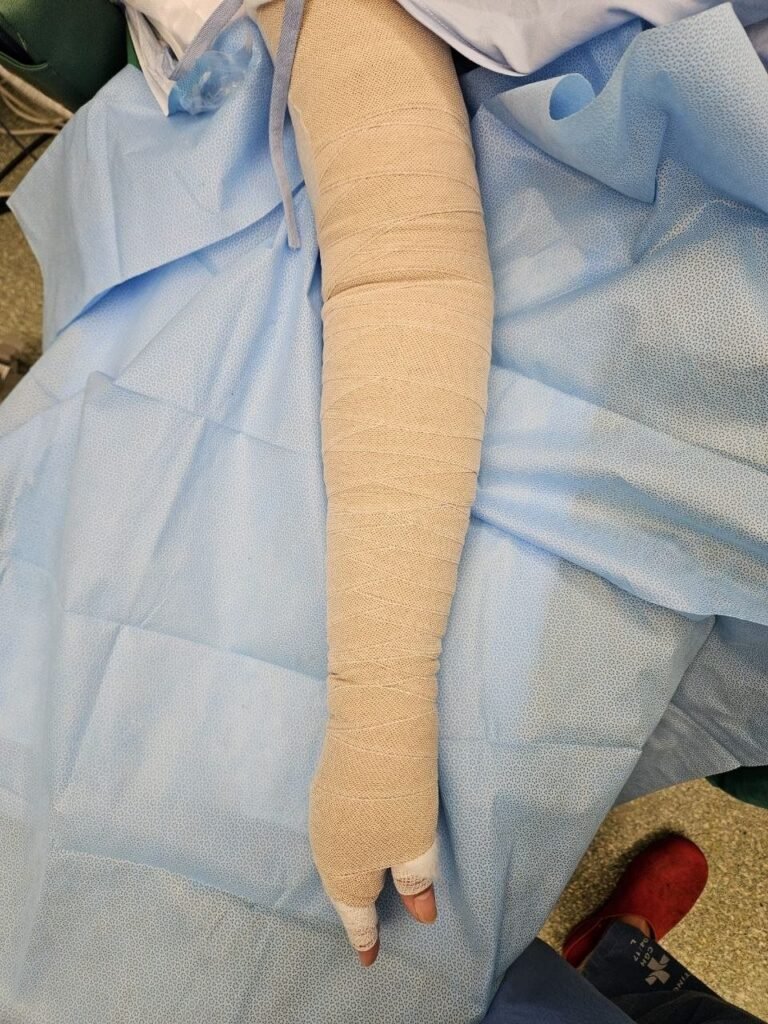
In most cases, lymphedema is managed rather than permanently “cured”. Good treatment can reduce swelling, improve comfort, lower infection risk and help patients function better, but ongoing compression, skin care, exercise or follow-up may still be needed. For selected patients, procedures such as LVA surgery / lymphovenous bypass or vascularized lymph node transfer may improve lymphatic drainage, but they should not be presented as reliable cure promises.
The first question most patients ask after a lymphedema diagnosis is: Will this ever go away? It is a fair question. And it deserves an honest answer, not the vague reassurance that often passes for one.
Clinically reviewed by Dr Jeremy Sun Mingfa, Senior Consultant Plastic and Reconstructive Surgeon in Singapore, with subspecialty expertise in lymphedema surgery and supermicrosurgical lymphatic reconstruction. Last reviewed: August 2026.
The short answer is: lymphedema, as currently defined,d is not curable in the conventional sense. But that single sentence tells you almost nothing useful. Whether lymphedema can be cured is the wrong question. The right question is: what can treatment actually achieve for your specific stage, and is the window for your best options still open?
This article gives you a clinically accurate, stage-by-stage answer to the question can lymphedema be cured, explains what remission looks like in practice and tells you what factors determine how much improvement is realistic for you.
What “controlled lymphedema” can realistically mean
For many patients, the goal is durable control rather than a one-time cure. This may mean less heaviness, fewer infections, easier garment use, improved limb size stability, better function and a clearer long-term plan. Results vary by whether the condition is primary or secondary lymphedema, how long swelling has been present, tissue fibrosis, BMI, infection history and the lymphatic imaging pattern.
When surgery may help
Selected patients may benefit from lymphedema surgical treatments such as LVA surgery, vascularized lymph node transfer or reductive procedures. A consultation with a lymphedema specialist in Singapore can help determine whether surgery is suitable, what improvement is realistic, and what ongoing therapy is still needed. Patients comparing options can also review lymphedema surgery cost considerations.
Why Is Lymphedema Not Considered Curable in the Conventional Sense?
To understand the answer, you need to understand what lymphedema actually is at a biological level.
Lymphedema is a structural failure of the lymphatic drainage system. Either the lymphatic vessels never developed properly (primary lymphedema) or they were damaged by surgery, radiation, or infection (secondary lymphedema). In both cases, the drainage capacity of the system is permanently reduced.
Because the damage is structural, no medication, no diet change, and no compression garment can restore the original architecture. The vessels that were removed in cancer surgery do not grow back. The scarring caused by radiation does not dissolve. This structural reality is what clinicians mean when they say lymphedema is a chronic condition.
However, the structure of the lymphatic system is not the whole story. Two other factors determine your outcome: how much lymphatic capacity remains, and whether what remains can be supported, redirected, or surgically reconnected.
In clinical practice, this means the question of whether lymphedema is reversible is answered differently at different stages. At Stage 0 and Stage 1, the remaining lymphatic vessels are still functional. At Stage 3, fibrosis [tissue scarring] has so thoroughly altered the affected area that the focus shifts from restoration to management.
What Does Lymphedema Remission Actually Look Like?
Remission is not a term you will find in ISL clinical guidelines for lymphedema, because the lymphatic damage that caused the condition does not disappear. But functional remission, meaning a state where swelling is controlled, the limb measures normally, and the patient no longer requires daily compression garments, is a realistic outcome for some patients.
This outcome is most achievable in patients treated with lymphovenous anastomosis (LVA) at Stage 1 or early Stage 2. LVA is a microsurgical procedure that connects the remaining lymphatic vessels directly to nearby small veins, creating a bypass route for lymph fluid to drain even without the original lymphatic pathways.
Published clinical data on LVA outcomes show significant volume reduction in the treated limb and, in a proportion of patients, sustained improvement that allows reduction or complete cessation of compression garment use. This is as close to remission as current lymphedema treatment can achieve.
Vascularised lymph node transfer (VLNT), another microsurgical option, transplants healthy lymph nodes from a donor site to the affected region. This procedure is used when the lymphatic system needs reconstruction rather than bypass, and it can produce meaningful long-term improvement in appropriate candidates.
Neither procedure works for everyone. Surgical candidacy depends on stage, vessel viability as confirmed by ICG lymphography [a real-time imaging technique using fluorescent dye], and the overall health of the tissue. A specialist assessment determines whether you qualify.
| DR. SUN’S CLINICAL PERSPECTIVE“In my practice, I do not tell patients that lymphedema is incurable. I tell them the truth, which is more useful: lymphedema is a condition with a biology that we now understand well enough to interrupt at the right stages. The patients I have treated with lymphovenous anastomosis at Stage 1 are not managing a chronic condition. Many of them have been off compression garments for years and have normal limb measurements. That is not a cure in the technical sense, but it is a functional outcome that patients describe as life-changing. The question is not only whether lymphedema can be cured. It is: what is your stage, and what does your specific biology allow?”Dr Jeremy Sun, Lymphedema Microsurgery Specialist, Singapore |
What Outcomes Are Realistic at Each Stage of Lymphedema?
The table below maps realistic treatment outcomes to each ISL lymphedema stage. This is where the question of whether lymphedema can be cured becomes stage-specific rather than a blanket answer.
| Stage | What Is Happening | Treatment Potential | Realistic Outcome |
| Stage 0 | No visible swelling. Lymphatic damage present. | High. Microsurgical and conservative options both available. | With early LVA, many patients avoid progression entirely. |
| Stage 1 | Visible swelling. Reverses with elevation overnight. | Good. Microsurgery most effective at this stage. | LVA can produce near-normal limb measurements in eligible patients. |
| Stage 2 (early) | Persistent swelling. Fibrosis beginning. | Moderate. Surgical options are narrowing but still present. | CDT halts progression. LVA assessed case by case. |
| Stage 2 (late) | Substantial fibrosis. Swelling no longer pits. | Limited. Surgical reconstruction less predictable. | CDT essential. Focus on stability and infection prevention. |
| Stage 3 | Severe irreversible tissue change. | Conservative. Debulking surgery in very select cases only. | Management focuses on function and infection risk reduction. |
The most important column is treatment potential. The window for microsurgical intervention closes as fibrosis advances. A patient at Stage 1 today who delays assessment for two years may present at Stage 2 or later, having lost the surgical options that were available earlier.
What Does Conservative Treatment Actually Achieve for Lymphedema?
For patients who are not surgical candidates or for whom conservative management is the primary approach, the goal is not cure. It is control. And meaningful control is achievable at every stage.
Complete decongestive therapy (CDT) is the international gold standard for lymphedema management. It combines four components: manual lymphatic drainage [specialist massage to move fluid], compression garments, specific exercise, and meticulous skin care to prevent infection.
What CDT can achieve:
- Reduction in limb volume, sometimes substantial, particularly in fluid-dominant stages
- Prevention of progression from Stage 1 to Stage 2 when applied consistently and early
- Reduction in cellulitis [skin infection] frequency, which is a significant quality-of-life benefit
- Stabilisation of fibrotic tissue, preventing further hardening in Stage 2 patients
What CDT cannot achieve:
- Reversal of established fibrosis at Stage 2 or Stage 3
- Restoration of lymphatic vessel function or architecture
- A permanent improvement that does not require ongoing maintenance
Compression garments require daily use to maintain the reduction CDT achieves. When garments are removed and not replaced, swelling typically returns within hours to days. This ongoing maintenance requirement is the defining practical feature of lymphedema as a chronic condition.
In clinical practice, this means that well-managed lymphedema with CDT and appropriate compression can allow patients to live with minimal functional limitation. The condition requires attention. It does not require surrender.
What Factors Determine How Much Improvement Is Realistic for You?
Two patients with the same ISL stage can have significantly different outcomes based on factors that a specialist can assess but that are not visible from the outside.
Viable Vessel Count
The number of functional lymphatic vessels remaining in the affected region determines surgical options. ICG lymphography maps these vessels in real time. A patient with several functional vessels at Stage 1 is a strong surgical candidate. A patient with no detectable vessels at Stage 2 is not, regardless of their stage.
Degree of Fibrosis
Fibrosis in the tissue reduces the effectiveness of both surgical and conservative treatment. Tissue tonometry [a device that measures tissue stiffness] can quantify the degree of fibrotic change. Early fibrosis responds better to treatment than late fibrosis.
Duration Before Treatment
Lymphedema treated within the first year of onset responds better than lymphedema that has been present for a decade without specialist care. This is not because the condition becomes untreatable over time, but because cumulative fibrosis and tissue change narrow the range of intervention options progressively.
Consistency of Self-Management
Patients who use compression garments correctly and consistently, maintain appropriate skin care, and engage in recommended exercise maintain their treatment gains better than those who do not. This is one area where patient behaviour directly influences outcome, regardless of stage or treatment type.
Is It Time to Find Out What Is Realistically Possible for Your Lymphedema?
The answer to whether lymphedema can be cured depends on your stage, your remaining vessel function, and the degree of tissue change that has already occurred. None of those factors can be determined from a general consultation or an online symptom checker. They require specialist assessment with lymphatic imaging.
The patients with the most options are the ones who seek assessment before fibrosis has advanced. If you are at Stage 1 or suspect you may be, the time to find out is now.
Dr Jeremy Sun is a lymphedema microsurgery specialist based in Singapore. His clinic, LymphEDasia, provides comprehensive staging, ICG lymphography, and treatment planning for patients across Asia and internationally, covering the full range from conservative CDT to surgical reconstruction.
| KEY TAKEAWAYS |
| ✓ Lymphedema is not curable in the conventional sense: the structural damage to the lymphatic system does not reverse. But meaningful, long-term improvement is achievable depending on the stage. |
| ✓ At Stage 0 and Stage 1, microsurgical procedures like LVA can produce outcomes close to functional remission in appropriate candidates, including normal limb measurements and reduced garment dependence. |
| ✓ Complete decongestive therapy (CDT) is the gold standard for conservative management. It controls the condition effectively but requires ongoing daily maintenance to sustain gains. |
| ✓ The degree of remaining vessel function, tissue fibrosis, and time since onset are the three factors that most determine how much improvement is realistic. |
| ✓ Earlier specialist assessment preserves more treatment options. The window for microsurgical intervention closes progressively as fibrosis advances. |
FAQs about whether lymphedema can be cured
Can lymphedema go away completely?
Sometimes swelling can improve substantially, especially when treated early, but many patients need ongoing maintenance. It is safer to think in terms of control, risk reduction and function rather than a guaranteed complete resolution in every case.
Can surgery remove the need for compression?
Some patients may reduce compression use after successful treatment, but this is not guaranteed. The decision depends on disease stage, imaging, surgical response, infection history and specialist follow-up.
For focused LVA explanations, see: Can LVA cure lymphedema?, can I stop wearing compression after LVA?, and why early LVA gives better results.
Related guide: When Is LVA Surgery Too Late for Lymphedema? explains how pitting, fibrosis and narrowed lymphatic channels affect whether LVA remains suitable in later-stage lymphedema.
Can lymphedema be cured?
Lymphedema is usually a chronic condition and should not be framed as cured. Treatments such as compression therapy, lymphatic rehabilitation, skin care, infection prevention and surgery may improve symptoms or lymph drainage in suitable patients, but outcomes vary and individual assessment is needed.