Your ankles have been swollen for years. You have been told it is your heart. Or your veins. Or simply your age. You have taken the water tablets, elevated your legs, worn the support stockings – and still, the swelling has not gone away. If anything, it keeps spreading. What nobody has told you is that lymphedema may be part of what is happening – and that it is frequently missed in older adults because it looks so much like other conditions that are far more commonly considered.
Clinically reviewed by Dr Jeremy Sun Mingfa, Senior Consultant Plastic and Reconstructive Surgeon in Singapore, with subspecialty expertise in lymphedema surgery and supermicrosurgical lymphatic reconstruction. Last reviewed: August 2026.
Managing lymphedema in elderly patients is one of the most clinically complex areas in lymphedema care. Aging changes the lymphatic system. It changes the skin. It adds comorbidities that complicate diagnosis and treatment. And it changes what management approaches are both safe and realistic.
This article explains what those changes are, why they matter for diagnosis, how management needs to be adapted, and when seeing a specialist – even at 70 or 80 – can still make a significant difference to your daily life.
What Happens to the Lymphatic System as You Age?
Your lymphatic system does not stay the same throughout your life. Like most body systems, it undergoes progressive changes from middle age onwards – and understanding those changes helps explain why lymphedema becomes more common, more complex, and harder to manage as you get older.
The core function of the lymphatic system is to collect excess fluid from your tissues and return it to the bloodstream. It does this through a network of tiny vessels driven by muscle contractions, breathing, and the pumping action of vessel walls. With age, all three of these mechanisms become less efficient.
Lymphatic vessel walls lose some of their elasticity. The valves inside the vessels – which prevent fluid from flowing backwards – become less competent. The smooth muscle in the vessel walls, which drives the pumping action of lymph flow, loses contractile strength. The result is a lymphatic system that moves fluid more slowly and less completely than it once did.
Skin changes compound this. Aging skin becomes thinner, less elastic, and less able to resist the build-up of fluid in the tissues. Fibrotic changes in the dermis (the deeper layer of skin) can develop more quickly when fluid accumulates, making it harder to reduce swelling once it becomes established.
According to research in the field of aging lymphatics, most people develop some degree of reduced lymphatic reserve by their 70s – meaning they have less capacity to handle extra demands on the system. An injury, surgery, infection, or period of immobility that a younger person might manage without lasting consequences can push an older person’s already-stressed lymphatic system into clinical failure.
In clinical practice, this means that the threshold for developing lymphedema – or for a previously compensated situation becoming symptomatic – is lower in older adults. The aging lymphatic system is more vulnerable, not just to cancer-related damage, but to a wide range of other stresses.
Why Is Lymphedema So Often Missed in Older Patients?
This is one of the most consequential clinical problems in geriatric medicine – and it has a straightforward explanation. Leg swelling in older adults is almost always attributed first to one of four common conditions: heart failure, chronic venous insufficiency (CVI), kidney disease, or low albumin (a protein that helps hold fluid in the bloodstream). Lymphedema rarely appears on the initial differential diagnosis list.
The reason is partly statistical and partly clinical habit. Heart failure, venous insufficiency, and kidney disease genuinely are common causes of leg swelling in older people. Lymphedema is less familiar to general physicians, and its diagnosis requires specific examination skills and sometimes imaging that most primary care settings do not routinely offer.
But the critical point – one that research in geriatric lymphedema consistently documents – is that these conditions frequently coexist. An older patient with heart failure and leg swelling may also have lymphedema. Treating the heart failure alone will reduce the fluid load on the lymphatic system, but it will not address underlying lymphatic dysfunction – which is why the swelling in many older patients never fully resolves despite apparently appropriate cardiac treatment.
Several features of swelling in older adults make clinical diagnosis of lymphedema harder. Bilateral leg swelling – which is the typical presentation in heart failure and venous disease – is also common in primary lymphedema of late onset. Skin changes that develop in older patients, such as lipodermatosclerosis (hardening of the skin and fat layer), can mask the early tissue changes that a clinician would normally use to identify lymphedema.
The Stemmer sign – a clinical test where the examiner tries to pinch the skin at the base of the second toe – remains a useful bedside indicator even in older patients. A positive sign (where the skin cannot be pinched into a fold) suggests lymphedema regardless of other contributing factors. But this test is not widely taught outside of lymphedema specialist settings.
| DR. SUN’S CLINICAL PERSPECTIVE“In my practice, I see many older patients who have been living with progressive leg swelling for years – sometimes a decade or more – before they receive a lymphedema diagnosis. By that stage, the skin has often changed significantly, the fibrosis is more advanced, and the management is harder than it would have been earlier. The reason they were not diagnosed sooner is almost always the same: the swelling was attributed to age, heart disease, or poor circulation, and lymphedema was never considered. This means for patients that if you are over 60 and have swelling that has not fully resolved with standard treatment for heart or vein problems, ask specifically whether lymphedema has been ruled out. The two conditions frequently coexist – and treating one while missing the other is one of the most common reasons older patients do not improve as expected.”– Dr Jeremy Sun, Lymphedema Microsurgery Specialist, Singapore |
How Do Comorbidities Change the Management Picture for Older Adults?
Managing lymphedema in an older adult is rarely a matter of applying standard treatment protocols and expecting standard results. The presence of other conditions – and the medications used to treat them – introduces a layer of complexity that requires careful individualised assessment.
| Consideration | Younger Adults (under 60) | Older Adults (60+) |
| Swelling cause | Often cancer-related or post-surgical; cause usually identifiable | More often mixed – cancer, venous insufficiency, heart, immobility, medications all contributing |
| Skin condition | Generally resilient; responds well to moisturising and skin care protocols | Skin thinner and more fragile; hyperkeratosis and skin folds develop more quickly |
| Compression tolerance | Usually tolerable; standard flat-knit garments manageable | Arthritis, reduced grip, or frail skin may make donning difficult; lower compression classes often needed |
| Exercise capacity | Higher capacity for intensive exercise programmes | Functional decline, joint pain, or balance issues may limit standard exercise protocols |
| Comorbidities | Fewer competing conditions; treatment plan simpler | Heart failure, CKD, diabetes, venous disease, lymphoedema often overlap; requires careful coordination |
| Response to CDT | Strong response typical with adherence | Response can be excellent but requires modified intensity and more frequent monitoring |
| Surgical suitability | Often good candidates for LVA or VLNT | Age alone does not exclude surgery; individual fitness assessment required |
The most clinically important interactions to understand are between lymphedema and the conditions listed below.
Chronic Venous Insufficiency
Chronic venous insufficiency (CVI) – a condition where the veins in the legs struggle to return blood to the heart – is extremely common in older adults and frequently coexists with lymphedema. When both are present, the condition is called phlebolymphedema or lipo-lymphoedema depending on the tissue involved. The venous high-pressure system floods the lymphatic system with more fluid than it can drain. Treating only the venous component, or only the lymphatic component, produces incomplete results.
Heart Failure
Heart failure increases the volume of fluid in the body’s tissues generally. This creates additional work for an already-compromised lymphatic system. Compression therapy in patients with significant heart failure requires specialist guidance, because applying compression to the legs returns fluid to the central circulation – which can worsen cardiac symptoms if the heart is not able to handle the additional volume. This does not mean compression is contraindicated, but it does mean it must be introduced carefully and in coordination with the patient’s cardiologist.
Diabetes
Diabetes affects both the small blood vessels and the nerves, creating particular risks in the context of lymphedema. Diabetic patients have higher infection risk, slower wound healing, and reduced ability to detect early skin problems due to peripheral neuropathy (reduced sensation in the feet and lower legs). Skin care protocols become more critical and more demanding in diabetic patients with lymphedema. Any break in skin integrity in a swollen, poorly-circulated limb carries a significant risk of cellulitis (skin infection) that can be difficult to control.
Reduced Mobility and Frailty
Physical activity drives lymphatic flow. The pumping of calf muscles during walking is one of the most important mechanisms for moving lymph through the legs. In older adults with reduced mobility, this mechanism is significantly impaired – and standard exercise-based lymphedema management programmes need to be substantially modified. Chair-based exercises, gentle range-of-motion work, and assisted mobilisation can all help maintain some degree of lymphatic pumping in patients who cannot walk long distances or sustain vigorous activity.
Why Can Compression Be More Difficult in Older Patients – and What Are the Options?
Compression therapy is the cornerstone of lymphedema management at any age. But older adults face several specific barriers that make standard compression protocols harder to follow – and that, if not addressed, lead to poor adherence and worsening outcomes.
The most common practical barrier is difficulty donning and doffing compression garments. Flat-knit compression stockings and sleeves require a degree of grip strength, finger dexterity, and physical reach that many older adults – particularly those with arthritis, reduced hand strength, or limited flexibility – do not have. Struggling each morning to get a tight garment on is not a minor inconvenience. For many patients, it becomes the reason they stop wearing the garment entirely.
A range of adaptations can address this. Donning devices – frames and slippery aids that make sliding the garment on easier – are widely available and significantly reduce the effort required. Open-toe garments reduce the difficulty of getting the toe end positioned correctly. Circular-knit garments (which are lighter and stretchier than flat-knit) may be appropriate for patients with less severe lymphedema who struggle with stiffer fabrics.
Adjustable compression wraps – velcro-fastened systems that can be applied without dexterity – have changed what is achievable for many older patients. Systems such as those made by Juzo, CircAid, and similar brands allow self-application with minimal hand strength and can be adjusted through the day as swelling fluctuates. These are particularly useful for patients living alone who do not have a carer to assist with garment application.
Compression class selection also requires individual assessment in older adults. Higher compression classes – typically recommended for more advanced lymphedema – may not be tolerated in patients with fragile skin, arterial insufficiency, or significant cardiac conditions. A lower compression class worn consistently is clinically preferable to a higher class worn intermittently or incorrectly.
In clinical practice, this means every older patient with lymphedema needs an individual compression assessment – not just a measurement for a standard garment – that takes into account their grip strength, their daily routine, who is available to help them, and the condition of their skin and circulation.
How Does Complete Decongestive Therapy Need to Be Adapted for Older Adults?
Complete decongestive therapy (CDT) – the standard four-component treatment combining manual lymphatic drainage (MLD), compression, exercise, and skin care – remains the foundation of lymphedema management regardless of age. But each component needs to be assessed and adapted individually for older patients.
Manual lymphatic drainage (MLD) is generally well tolerated in older adults and may be particularly beneficial because it does not require physical effort from the patient. The gentle, rhythmic movements stimulate lymphatic vessels through the skin – making it suitable even for patients with significant mobility limitations or frailty. The key consideration is monitoring for the cardiovascular effect: redirecting large volumes of lymph into the central circulation during MLD can increase cardiac workload, and sessions may need to be shorter or modified in patients with significant heart failure.
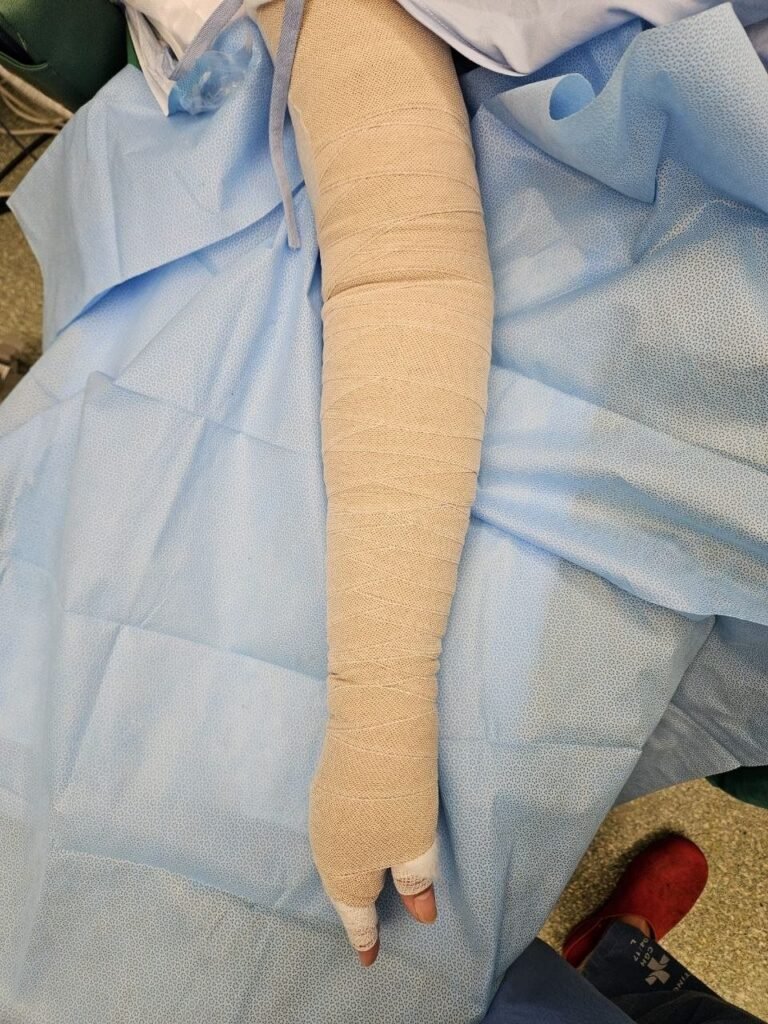
Compression bandaging during the intensive phase of CDT requires a skilled therapist to apply correctly and safely in older patients – particularly around fragile skin, bony prominences, and areas of reduced sensation. The bandages provide a lower-pressure, more forgiving environment than garments and are often more suitable than jumping straight to a compression stocking in the initial phase of treatment.
Exercise in CDT for older adults needs to be matched to functional capacity. Chair-based limb exercises, gentle walking programmes, aquatic therapy, and tai chi have all shown benefit in older patients with lymphedema – the key is that the calf muscles activate during activity, driving lymphatic pumping. Falls risk must be considered when prescribing any exercise programme; balance assessments and physiotherapy involvement are often appropriate.
Skin care becomes more intensive – not less – in older patients. Aging skin requires more frequent moisturising, more careful inspection for micro-injuries, and more vigilant monitoring for early signs of cellulitis. Patients with reduced vision or sensation may need assistance from a carer or family member to inspect areas they cannot see themselves.
Is Surgery Still an Option for Lymphedema in Older Adults?
This is a question many older patients assume they already know the answer to. They assume age makes surgery impossible. In the majority of cases, that assumption is wrong.
Lymphedema microsurgery – specifically lymphovenous anastomosis (LVA) and vascularised lymph node transfer (VLNT) – does not have an upper age limit. The relevant criteria are physiological fitness, cardiovascular health, and the presence and quality of patent lymphatic vessels that can be used for the procedure. A healthy 72-year-old is a far better surgical candidate than an unwell 55-year-old with multiple uncontrolled comorbidities.
LVA in particular is a minimally invasive microsurgical procedure performed under local or regional anaesthesia in many centres – meaning it does not carry the same risks as major general anaesthesia. The incisions are small, recovery is relatively rapid, and the procedure can meaningfully reduce limb volume, infection frequency, and compression garment dependence. For older adults exhausted by the daily burden of compression management, a successful LVA can genuinely change the management picture.
The honest clinical caveat is that surgical outcomes in older adults with significant comorbidities require careful pre-operative assessment. Fragile lymphatic vessels, coexisting venous disease, or advanced fibrotic changes in the limb can affect the technical success of microsurgery. An older patient should not be excluded from surgical assessment on the basis of age – but they should expect a thorough evaluation before any recommendation is made.
According to published case series, carefully selected older patients who undergo LVA show comparable rates of limb volume reduction and quality of life improvement to younger cohorts, with acceptable complication rates when pre-operative assessment is thorough.
What Should Older Patients With Unresolved Swelling Do Next?
If you are over 60 and have been living with persistent leg or arm swelling that has not fully responded to treatment for heart, kidney, or vein problems, lymphedema deserves specific consideration. You do not need to wait until your swelling is severe or your skin has changed. Earlier assessment means more treatment options and better long-term results.
The specific steps worth taking:
- Ask your GP directly whether lymphedema has been excluded as a diagnosis – not just assumed absent. Request a referral to a lymphedema specialist clinic rather than a general physician or standard physiotherapy service.
- Bring a list of all your current medications to any lymphedema assessment. Several drugs – including calcium channel blockers, corticosteroids, and some antihypertensives – can contribute to or worsen swelling, and a specialist needs the full picture.
- Ask about compression assessment, not just a prescription. An older patient needs an individual evaluation of garment type, compression class, and donning method – not a standard protocol applied without consideration of your specific circumstances.
- Do not rule out surgical assessment without an evaluation. Age alone is not a disqualifier. Ask explicitly whether you might be a candidate for LVA or VLNT evaluation.
If you have concerns about lymphedema in elderly patients or in a family member over 60, speaking with a lymphedema specialist who understands the complexity of aging and comorbidities can make a measurable difference. Dr Jeremy Sun consults at Lymphedema Asia, a specialist lymphedema clinic in Singapore offering individual assessment, compression guidance, and surgical evaluation for patients of all ages.
Related surgical assessment guide: For patients comparing options such as lymphatic imaging, ICG lymphography, LVA / LVB and lymphovenous bypass, see LVA surgery in Singapore: lymphovenous bypass for lymphedema.